
What it is
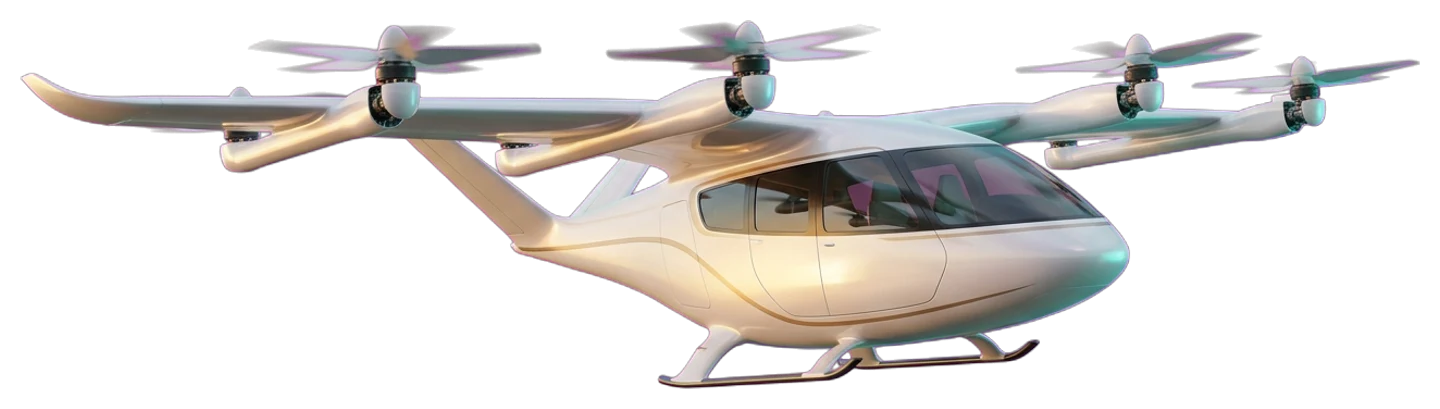
An eVTOL is an aircraft that uses electric motors to take off, hover and land vertically like a helicopter, then flies forward efficiently like an aeroplane.
Future of Aviation
Electric vertical take-off and landing aircraft could change how people travel short distances. Here is a clear, simple introduction to the technology, how it works and what it may mean for careers in aviation.
eVTOL basics
Often called an electric air taxi, an eVTOL aims to make short trips quicker, quieter and cleaner.
An eVTOL is an aircraft that uses electric motors to take off, hover and land vertically like a helicopter, then flies forward efficiently like an aeroplane.
Battery packs feed electric motors that spin propellers or rotors. Many designs use several smaller motors, so the aircraft keeps flying safely even if one stops.
Digital flight-control computers constantly balance the aircraft and smooth the transition between hovering and forward flight, supporting the pilot or automation.
Flight profile
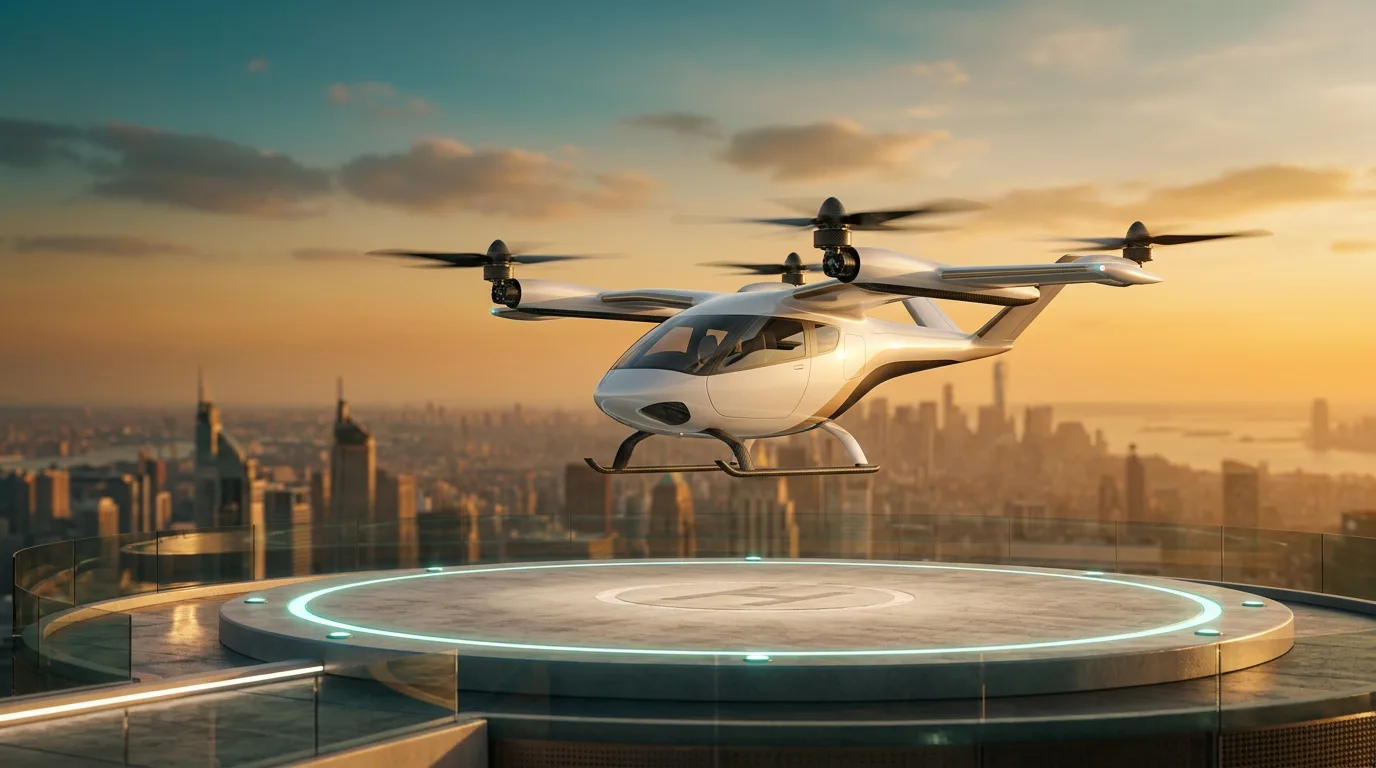
Five simple phases take an air taxi from one vertiport to the next.
Lift propellers raise the aircraft straight up from a small pad.
The aircraft gains speed and shifts from vertical lift to wing-borne flight.
Wings carry the load, so the motors use less energy over the trip.
The aircraft slows and transitions back to hovering flight.
It descends gently onto a vertiport with no runway needed.
Why it matters
These are goals the industry is working towards. Real-world results will depend on regulation, infrastructure and technology maturity.
Electric propulsion produces no exhaust in flight, supporting cleaner short-haul travel.
Many designs aim to be noticeably quieter than conventional helicopters in urban areas.
Electric motors have fewer moving parts than combustion engines, which can ease maintenance.
Point-to-point flights could skip congested roads and shorten city and regional trips.
Urban air mobility
Urban air mobility is the idea of using eVTOL aircraft for short hops, such as airport transfers, inter-city links and medical or emergency transport.
What it will take to work:
Careers
As the industry grows, demand is expected for people with strong aviation fundamentals.
Skilled crews trained for new aircraft and new types of flight.
Technicians for batteries, electric motors and flight-control systems.
Teams for passenger handling, safety, charging and turnaround.
Specialists who coordinate many low-altitude flights safely.
Our current programmes build the aviation foundations these roles rely on. We do not currently offer eVTOL specific licensed training.
Golden Feather Aviation is sharing awareness about eVTOL technology and exploring its place in the future of aviation. We do not manufacture, own, operate or sell eVTOL aircraft or air-taxi services today. Information on this page is general and educational, and timelines depend on regulators and industry progress.
Get in touch
Curious about eVTOL technology and aviation careers? Share your details and our team will get back to you.